

Clarity

It makes sense that when our world is turned upside down and everything feels out of control, we need clarity more than ever. Unfortunately, those are often the moments when we feel the most frustrated, stressed, and anxious—emotions that can cloud our thinking.
I know that during the most difficult periods of my life, I’ve been the least productive, the most fearful, and completely scatterbrained. I remember that during the year I had cancer, I received three traffic tickets, forgot appointments, mixed up schedules, and found myself at Target without my purse more times than I can count. Under the circumstances, these were certainly the least of my problems. Still, I wish I had known then what I know now about the benefits of finding calm in the middle of a storm.
Since then, I’ve learned how important it is to calm myself when I feel anxious. I’ve struggled with anxiety my entire life, and eventually became so tired of living with it that I decided to do whatever it took to learn how to manage it. I still struggle, but I’m doing much better now that I’ve developed some helpful coping skills.
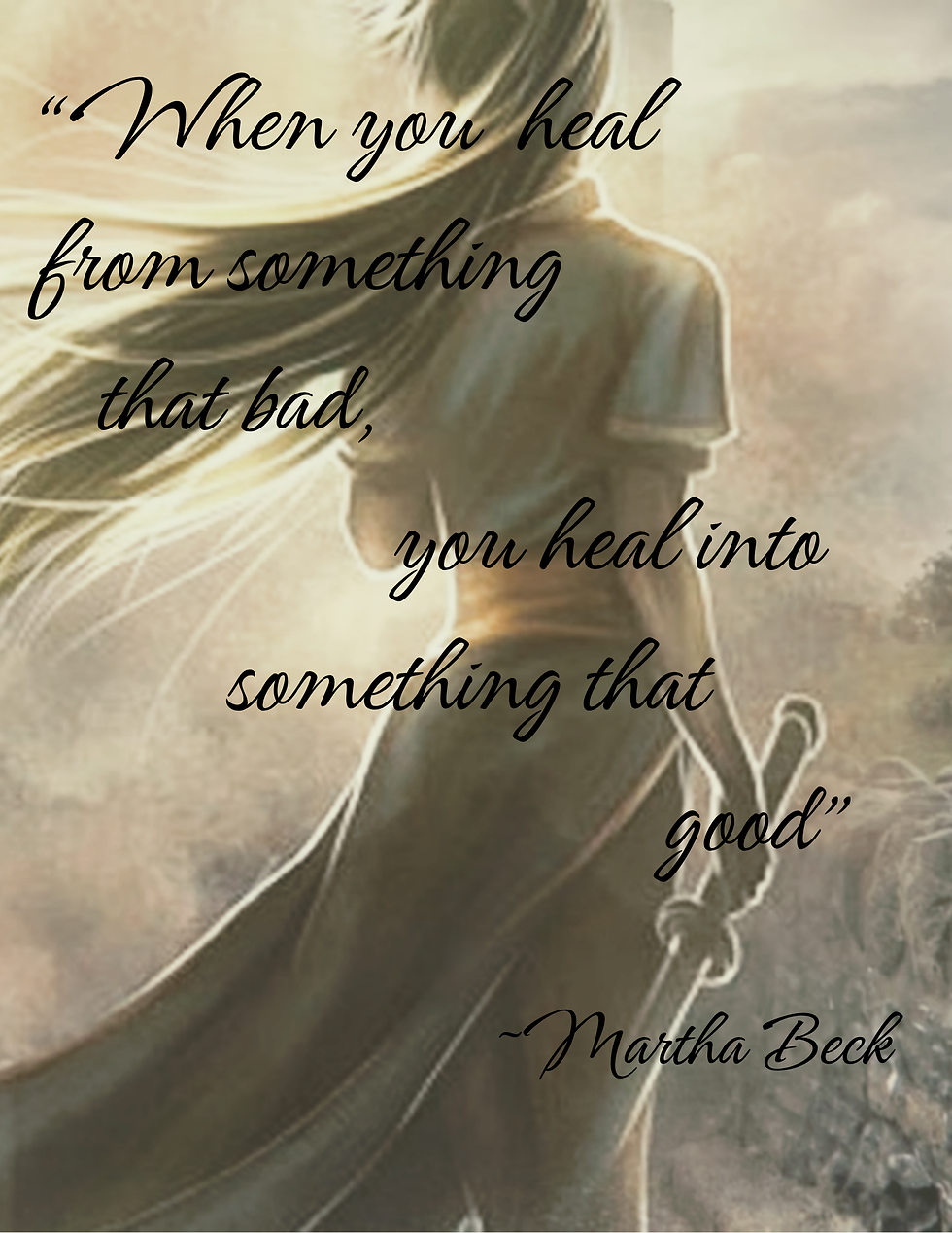
Martha Beck’s book Beyond Anxiety has been an especially valuable resource. It explains that anxiety lives in the left side of the brain, along with analytical, logical, and verbal thinking, while the right side is associated with perception, emotion, and intuition. Curiosity, creativity, and calm also reside there.
The idea, then, is to move our thinking out of the left side of the brain and into the right by becoming curious or engaging in something creative. The process begins with deep breathing, followed by relaxing the eyes, face, shoulders, and body. Sometimes we also need to move around to release some of the nervous energy.
The next step, which Martha calls “calming the creature,” involves soothing our primitive selves—the part of us that automatically shifts into fight-or-flight mode, often before we even realize what’s happening. We can do this through Kind Internal Self-Talk, or KIST, reassuring our primitive creature that everything is okay and that we are not in immediate danger.
She also encourages us to look for what she calls “glimmers”—things that help us feel calm, such as a family photo, a favorite book, or a pair of cozy socks. Once we’re calm and no longer in fight-or-flight mode, we can begin to approach our situation with curiosity. Instead of panicking, our minds become more capable of problem-solving and creative thinking.
I’ve also found that other activities can help pull me out of my anxious mind. Taking my dog for a walk while listening to music, practicing yoga with a short meditation afterward, and talking with a good friend who helps me put things into perspective have all been helpful.
Recently, my girls and I started taking walks together and talking about our “glimmers”—the things that make us feel calm. We added “shimmers,” the things that make us feel happy, and “sparkles,” the things that make us feel excited. I know the words are a little silly, and we laughed while creating them, but we decided to keep them as part of our calming practice. I have to admit, after our walks, we genuinely feel better—and much more hopeful.
Since adding these coping skills to my daily life, I’ve noticed that it’s becoming easier to move from panic to calm within a matter of minutes. Once I’m calm, I’m able to see things from a different perspective. Soon, clarity begins to emerge and hope begins to rise. Then a new outlook on life takes shape, leading to purpose and action.
And that’s where the real adventure begins.


Comments